




Rosidal® TCS two-component compression system, 6 ST

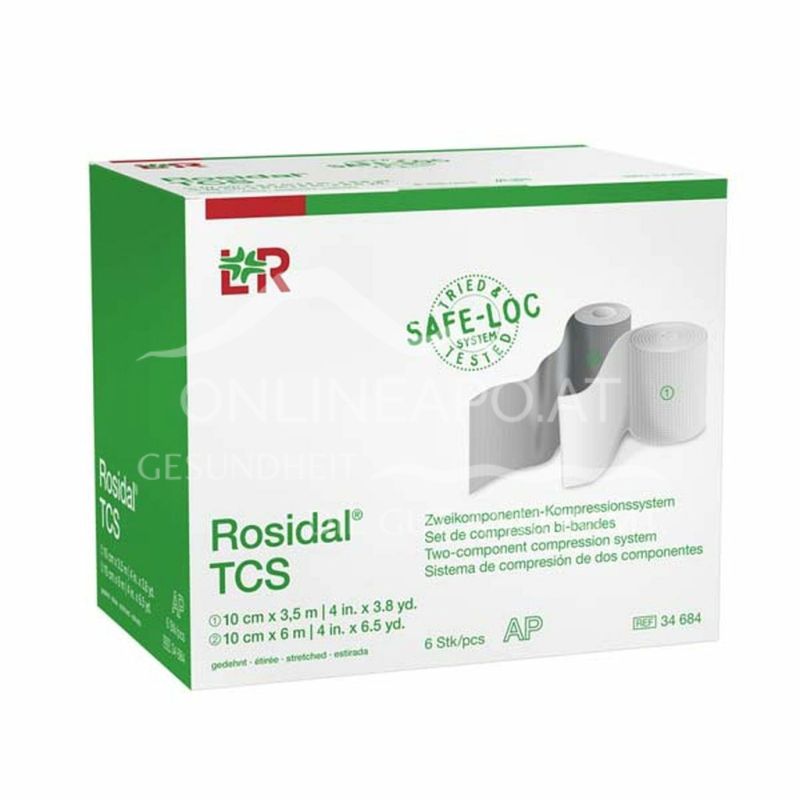
The Rosidal® TCS two-component compression system, consisting of a padding and a short-stretch compression bandage, is used for compression, fixation of bandages, support and relief and immobilisation of body parts.
€115.92*
Prices incl. VAT plus shipping costs (May vary by country)
Ready to ship in 1-3 working days ⁴
The Rosidal® TCS two-component compression system, consisting of a padding and a short-stretch compression bandage, is used for compression, fixation of bandages, support and relief and immobilisation of body parts.
From the acute to the healing phase ... L&R offers a comprehensive range of compression bandages for all phases of treatment. As part of this, numerous different compression products are available to create a coherent overall concept. The realisation of the highest quality standards ensures the greatest possible benefit for the user and the best chances of recovery for the patient.
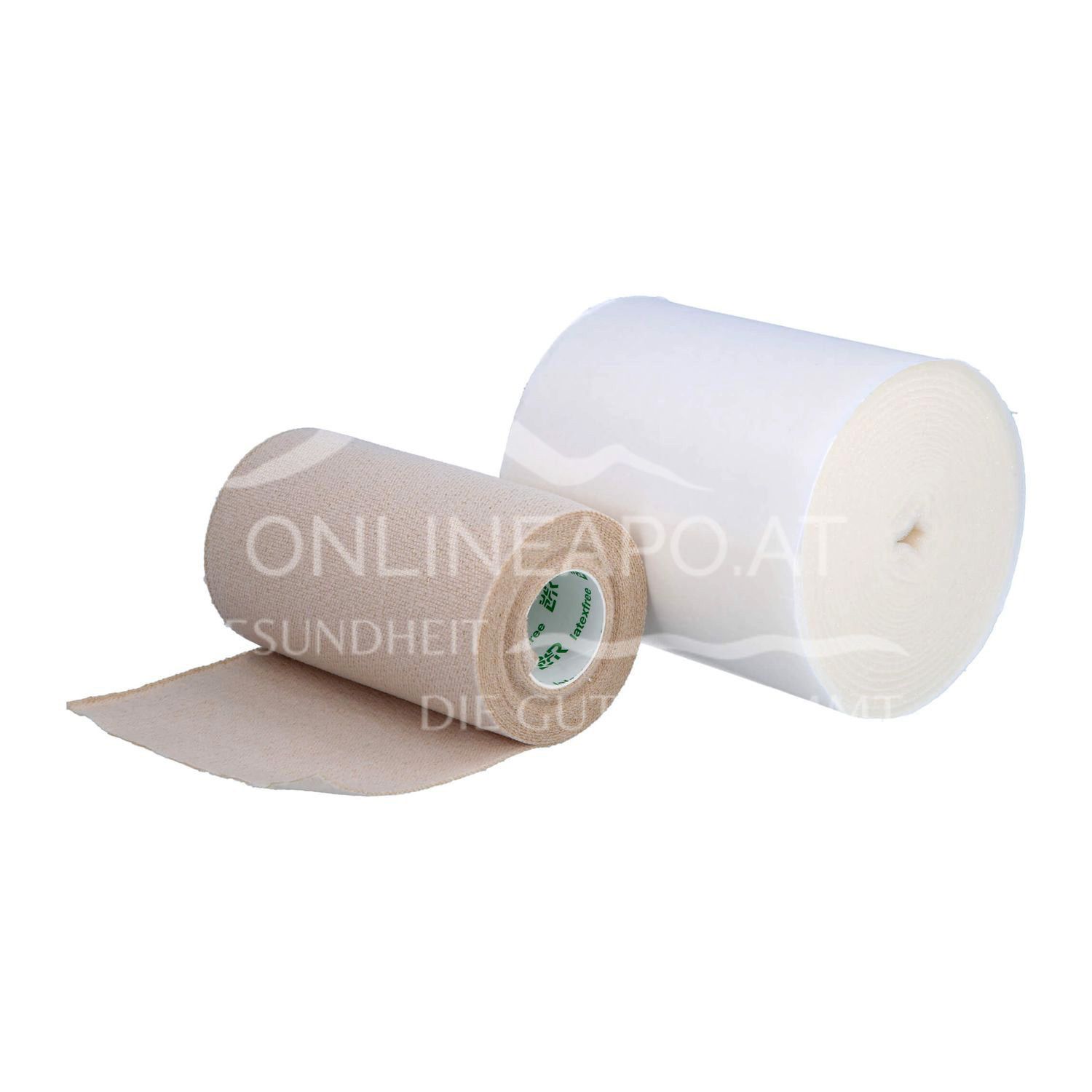
It's all in the mix: This also applies to Rosidal TCS, the "Rosidal Two-component System". This is the combination of two products into one safe system: the innovative cushioning compression bandage Rosidal SC (Soft Compression) with integrated textile skin protection paired with the cohesive short-stretch compression bandage Rosidal CC (Cohesive Compression). The solution impresses with its user and patient friendliness. Thanks to Safe-Loc, it is a system that is easy to apply under full tension and is comfortable to wear. The low resting pressure is a clear plus for compliance, especially at night. The Rosidal TCS system components are free from natural rubber latex, making them a good alternative for people with latex hypersensitivity.
Areas of application
- For the treatment of venous leg ulcers and associated conditions
- For the treatment of oedema
Properties
- Two components combined in a ready-to-use and handy set
- Integrated skin protection in the first layer
- Cohesive second layer
- Bandage is hardly noticeable
- Fits effortlessly into the shoe
Advantages
- Safe-Loc system: very simple without pressure indicators - safe application under full tension
- Cushioning compression bandage with integrated skin protection - for high wearing comfort
- Cohesive compression bandage - adheres to itself and reduces the risk of slipping with high stiffness
- Fits snugly and is hardly noticeable - fits effortlessly in the shoe
Notes
- System is intended for single use
- Therapeutic working pressure is maintained over several days
- Attachment under full tension (Safe-Loc)
- Not made with natural rubber latex
Dosage form
- 1 roll - Rosidal® SC cushioning compression bandage (stretch approx. 50 %; white) - 10 cm x 3.5 m
- 1 roll - Rosidal® CC: natural latex-free cohesive compression bandage (stretch approx. 75 %; cream-coloured) - 10 cm x 6 m
Application
Preparation:
- The usual diagnostic tests for vascular status must be carried out before applying the bandage.
- Before applying the dressing, an existing wound must be cleaned/debrided and covered with a wound dressing according to the wound status.
Application instructions:
- Training in correct application by healthcare professionals is recommended.
- The rolled-up part of the bandage (bandage head) points outwards. The bandage head should be kept close to the leg.
- Always apply both bandages under full tension (max. stretch = Safe-Loc®).
- To maximise joint movement, it is recommended that the bandage is applied to the foot at a right angle (90°) (Fig. 1).
- Excess bandage material can be cut off.
- Use plaster strips to secure the bandage. Do not secure with bandage clips as these can cause injury. a. Measure the circumference of the ankle. If necessary, increase the circumference of the leg (<18 cm) with the padding compression bandage (white). b. Apply the padding compression bandage under full tension with two turns around the tarsus (Fig. 2), including the heel (Fig. 3). Continue with approx. 50 % overlap up to approx. 2 cm below the fibula head. Secure the end (Fig. 4). c. Apply the cohesive compression bandage (cream-coloured) in the same way as the first layer, initially with two turns around the tarsus under full tension (Fig. 5). d. Roll the bandage around the back of the leg in figure-eight turns, including the heel (Fig. 6), up to approx. 3 cm below the fibula head. e. Finished bandage (Fig. 7). f. To prevent the edges of the bandage from rolling up, they can be secured with long strips of plaster.
Warnings and precautions:
- Do not use on ankle circumferences of less than 18 cm unless the padding material increases the circumference to over 18 cm.
- Improper bandaging can result in skin necrosis and nerve pressure damage.
- A slight blue colouration of the toes is normal and should disappear as soon as the patient begins to walk.
- If the symptoms do not disappear (pain and blue discolouration), the bandage must be removed and reapplied with less compression.
- If the pain increases significantly while wearing the bandage, the patient must contact a doctor.
- In the case of diabetes with advanced microangiopathy - only use under medical supervision.
- Do not secure with bandage clips as these can cause injuries.
General instructions:
- It is recommended to apply the bandage in the morning before getting up or after prolonged elevation of the leg and to encourage the patient to walk afterwards.
- The bandage must be applied in such a way that the pressure of the bandage decreases from the foot to the knee.
- The bandage can be worn day and night.
Ingredients
- Rosidal® SC: Polyurethane foam with textile fabric made of 60 % polyamide, 40 % cotton.
- Rosidal® CC: 51 % cotton, 39 % polyamide, 10 % polyurethane, synthetic rubber-coated.
| Piece: | 6 |
|---|