


Nestlé Beba premature infant formula stage 2 powder, 400 G

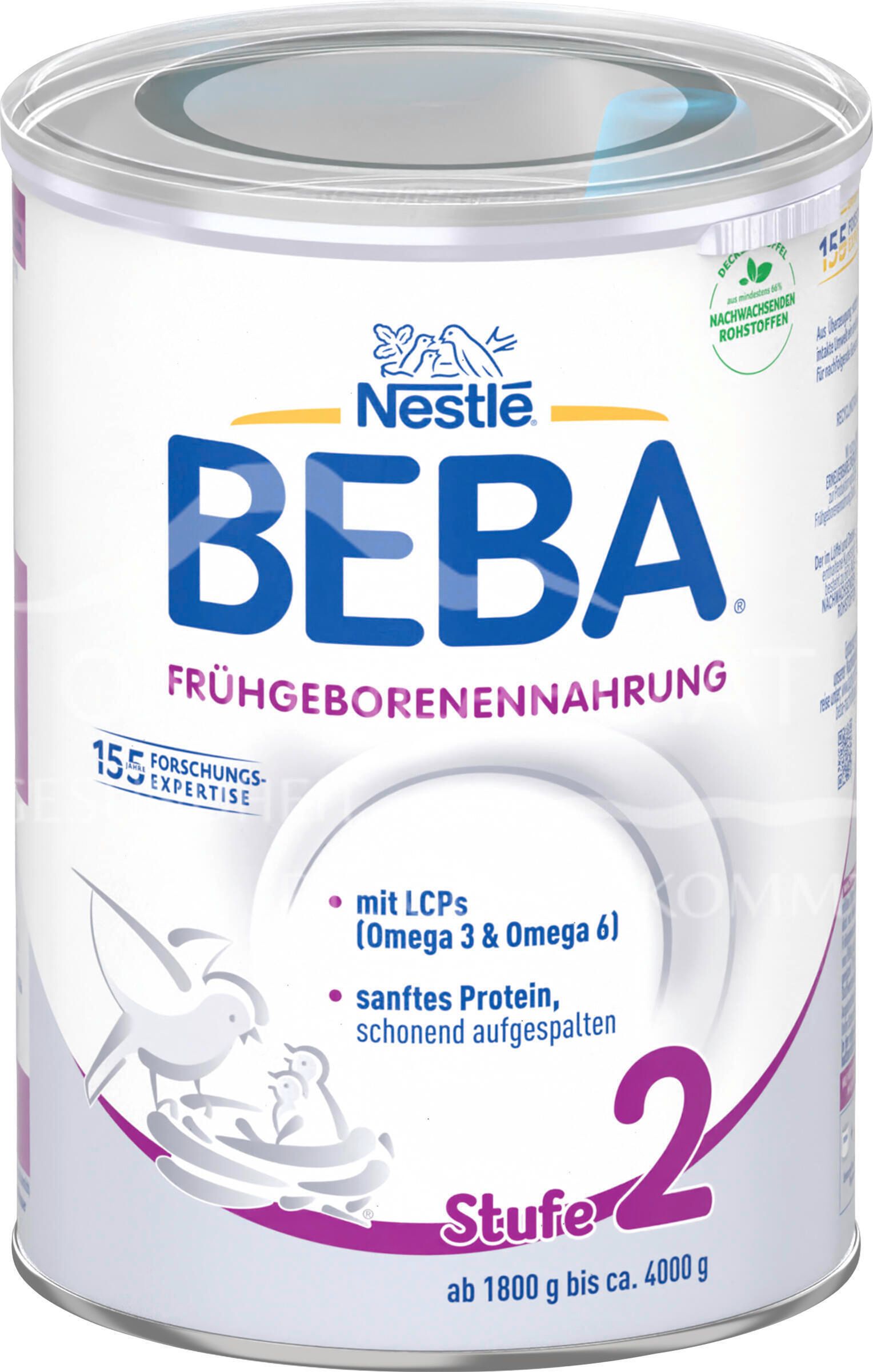
Nestlé Beba premature infant formula stage 2 has been specially developed for the special nutritional needs of premature babies. With hydrolysed protein, important vitamins and minerals, it supports your baby's healthy development.
€13.99*
Prices incl. VAT plus shipping costs (Kann sich je nach Land ändern)
⁴
Nestlé Beba premature infant formula stage 2 has been specially developed for the special nutritional needs of premature babies. With hydrolysed protein, important vitamins and minerals, it supports your baby's healthy development.
Product benefits
Nestlé BEBA Premature Infant Formula Stage 2 is tailored to the special nutritional needs of your premature baby after discharge from hospital (from 1800 g to approx. 4000 g) and supports its healthy development until it reaches the desired body weight.
- Contains PRO HA protein, which has already been broken down into small building blocks
- With long-chain polyunsaturated fatty acids Omega 3 (LCP)
- The composition is based on the ESPGHAN* recommendations
*ESPEGHAN Committee on Nutrition (2006). J Pediatr Gastroenterol Nutr 42:596-603
Important tips
Breastfeeding is best for your baby. Breast milk has an ideal composition, helps to protect against infections and allergies and at the same time promotes the mother-child relationship. Breastfeeding is also the cheapest form of nutrition. The earlier and more frequently you breastfeed your baby, the sooner the milk flow will start.
A balanced diet during pregnancy and after delivery favours breastfeeding. The decision not to breastfeed is difficult to reverse and supplementing with formula can affect the success of breastfeeding. Talk to your paediatrician or midwife if you want to use formula.
Improper preparation of infant formula, the use of foods that are not suitable as infant formula or inappropriate nutrition can lead to health problems. Please therefore carefully follow the instructions and preparation instructions on the packs.
Dosage form
powder
Directions for use
Preparation:
- Hygiene is important - therefore you should wash your hands thoroughly before preparing a bottle.
- The temperature of the water used to prepare the baby bottle should not exceed 40°C. To do this, first heat the water to 100°C for approx. 5 minutes. The high temperature ensures that all germs and bacteria that may be in the water are killed. Then let the water cool down to 40°. Higher temperatures can destroy important ingredients such as lactic acid cultures.
- The amount of water and milk powder you need for the bottle is written on the back of the can. Please always follow the instructions exactly so as not to under- or overdose the bottle.
- Now pour about 2/3 of the required amount of water into the bottle.
- Next, add the milk powder to the water using the measuring spoon provided. You can wipe the measuring spoon off the practical inner frame of the tin. Important: Please do not use heaped measuring spoons!
- Now screw the bottle closed and swirl it sideways until the powder is well dissolved.
- Finally, add the rest of the water and swirl the bottle again.
- When feeding, the milk should be at body temperature (approx. 37°C). You can check the temperature and make sure the milk is not too hot by dripping a little liquid onto the inside of your wrist.
- After preparation, it is important to close the can tightly. You can place the measuring spoon on the inside frame of the tin. This ensures that the milk powder and measuring spoon are stored hygienically.
Important:
Always prepare baby's bottle fresh and according to the instructions!
Drinking quantity & dosage:
The amount to drink per bottle can vary from individual to individual. The dosage is based on the doctor's recommendation depending on the weight and maturity of the premature baby. As a guideline, a premature baby requires an average amount of 150 ml/kg body weight per day. This amount can be distributed over 5-10 meals a day.
Ingredients
Ingredients: MILK SUGAR, maltodextrin, hydrolysed whey protein, vegetable oils (sunflower oil, rapeseed oil), vegetable fats (palm fat, coconut fat), calcium orthophosphates, potassium hydroxide, magnesium chloride, potassium orthophosphates, algae oil, oil from Mortierella alpina, sodium hydroxide, potassium chloride, choline tartrate, vitamin mixture (vitamin C, vitamin E, vitamin A, pantothenic acid, niacin, vitamin D, vitamin K, vitamin B1 (thiamine), vitamin B2 (riboflavin), vitamin B6, folic acid, vitamin B12, biotin), calcium chloride, inositol, L-arginine, acidity regulator citric acid, taurine, ferrous sulphate, lactic acid bacteria (with Bifidobacterium lactis), Zinc sulphate, L-carnitine, nucleotides (cytidine-5-monophosphate, uridine-5-monophosphate, adenosine-5-monophosphate, guanosine-5-monophosphate), copper sulphate, potassium iodide, manganese sulphate, sodium selenate.
Allergens according to recipe:
- Milk and milk products (incl. lactose)
| Gramm: | 400 |
|---|
Anwendungshinweise
Cutsomers also bought
Content: 100 Stück
ab €0.58*
Content: 120 Stück
€22.99*