
3M™ Cavilon™ Non-irritant Skin Protection Lolly, 3345E, 3ml, 25 ST

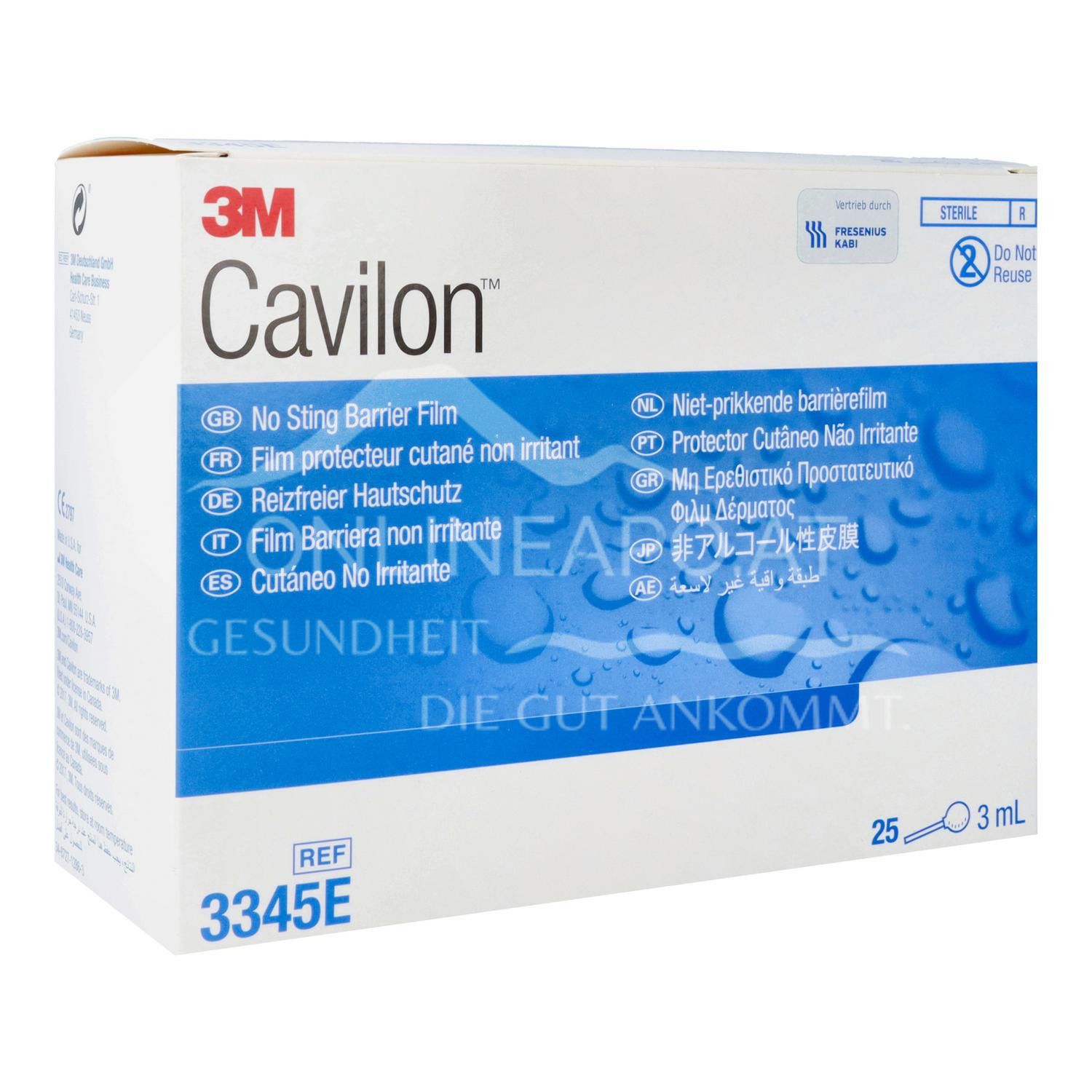
The 3M™ Cavilon™ Non-irritant Skin Protection Lolly is an alcohol-free skin protection barrier that protects intact, compromised or damaged skin from urine, faeces, body fluids and friction.
€102.20
(May vary by country)
Ready to ship in 1-3 working days ⁴
No parcel tax applies to your order from Onlineapo.at.
The 3M™ Cavilon™ Non-Irritating Skin Protection Lolly is an alcohol-free skin barrier that protects intact, vulnerable or damaged skin from urine, faeces, bodily fluids and friction.
3M™ Cavilon™ Non-Irritating Skin Protection is the original, alcohol-free, liquid barrier film that dries quickly to form a breathable, transparent protective film on the skin.
It has been developed to protect intact, compromised or damaged skin from urine, faeces, other body fluids and skin injuries caused by medical adhesives (MARSI), as well as from friction. Provides protection for up to 72 hours¹ ² and is non-irritating when applied to damaged skin.
Features
- Dries quickly and is non-sticky, for easy application and to improve patient comfort⁵
- Alcohol-free; does not sting, even on irritated or damaged skin
- Safe; does not interfere with the healing process of irritated, damaged skin³ ⁴
- Acts as a barrier against body fluids for improved continence care, without the need for removal
- Proven to protect the skin during the management of vascular access sites⁶. Compatible with chlorhexidine gluconate and povidone-iodine⁷
- Enables the securing of roll dressings and bandages
- Peel-open packaging allows for sterile removal of the applicator (applies to 3343)
Indications
- Prevention of IAD (incontinence-associated dermatitis)⁸
- Protection of the skin around stomas and drains⁸
- Protection of the wound perimeter⁸
- Prevention of skin injuries caused by medical adhesives (MARSI) in the area of vascular access sites, under adhesive dressings, roll plasters and negative pressure wound therapy (NPWT)⁸
- Protection against moisture and friction ¹⁰ (intertriginous dermatitis)
¹ 2010 Grove et al. 3M White Paper. A Comparison of the Durability of Four Barrier Film Products Over a 72-Hour Period on Human Volunteers. ² CLIN-RPT-FINAL-ICH3-US-05-155867 EM-05-012107 Study to Determine the Ability of the Carbon Black Retention Method to Assess the Durability of Film-Forming Agents, Sponsor Final Report (2010). ³ Cameron J, Hoffman D, Wilson J, Cherry G. “Comparison of two peri-wound skin protectants in venous leg ulcers: a randomised controlled trial”. J Wound Care, vol. 14, no. 5, 2005, pp. 233–236. ⁴ Rueda Lopez J, et al. “A comparative study of a barrier product versus zinc oxide for the treatment of incontinent lesions”. Oral presentation at the World Union Wound Healing Society (WUWHS) Meeting in Paris; 2004. ⁵ CLIN-RPT-FINAL-INV-US-05-289804 EM-05-013869 Study to Assess the Durability of Film-Forming Barriers Using the Activated Carbon Retention Method (2016). ⁶ CLIN-SUPPORT-05-863013 NSBF Clinical Evidence Summary Brochure (2022). ⁷ 3M data on file. ⁸ CLIN-SUPPORT-05-863013 NSBF Clinical Evidence Summary Brochure (2022). ⁹ CLIN-MISC-US-05-333303 Additional Clinical Evidence for NSBF (2017). ¹⁰ CLIN-MISC-US-05-169008 NSBF Friction Study Grove (2011)
Dosage form
Lollipop swab
| Piece: | 25 |
|---|