
Suprasorb® Liquacel Hydroactive Fibre Dressing sterile, 5 x 5 cm, 10 ST

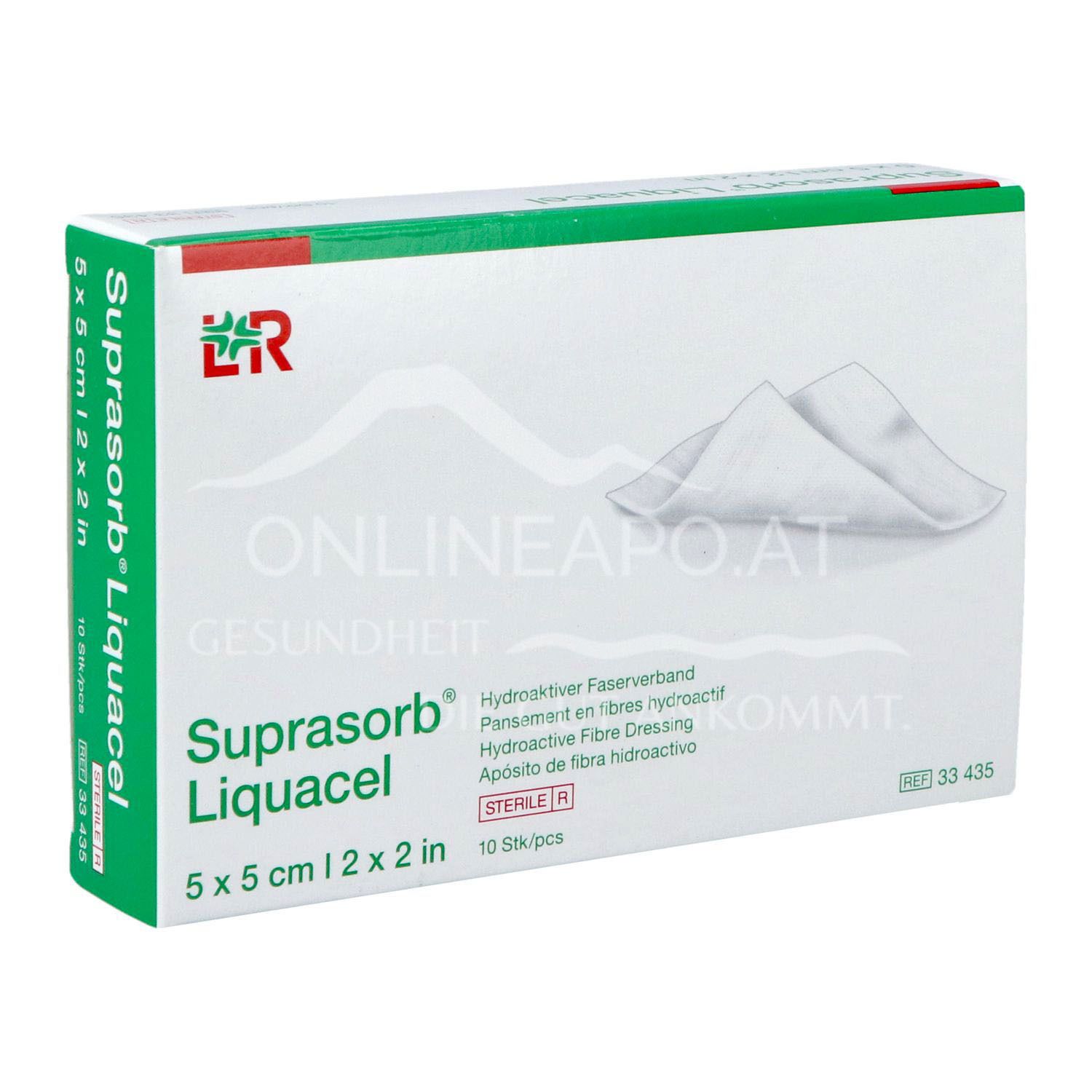
Suprasorb® Liquacel is a sterile, hydroactive fibre dressing for the treatment of moderately to heavily exuding wounds. It promotes wound healing, creates an optimal wound environment and offers optimum comfort.
€23.20
(May vary by country)
Ready to ship in 1-3 working days ⁴
No parcel tax applies to your order from Onlineapo.at.
Suprasorb® Liquacel is a sterile, hydroactive fibre dressing for the treatment of moderately to heavily exuding wounds. It promotes wound healing, creates an optimal wound environment and offers optimum comfort.
Suprasorb® Liquacel is a wound dressing with a soft, supple non-woven fabric consisting of a blend of gel-forming cellulose ethylsulphonate (CES fibres) and reinforcing cellulose fibres. On contact with wound exudate or blood, the absorbent wound dressing forms a gel, which creates a moist wound environment. This can support autolytic debridement and the healing process. The gel formation allows debris and bacteria present in the wound exudate to be trapped within the fibre dressing and removed during dressing changes. When dry, the Suprasorb® Liquacel wound dressing can be easily cut to the size of the wound. The structure of the dressing is maintained even when wet, with gelled fibres. The high vertical exudate absorption into the fibre dressing protects the wound environment and thewound edges¹ and thus supports the healing process. The product is intended for single use only.
Suprasorb Liquacel reduces the risk of maceration through vertical exudate absorption and transfer to the secondary dressing. Suprasorb Liquacel gels on contact with exudate to form a clear gel that traps wound exudate, debris and bacteria.
It has been found that, when dry, Suprasorb Liquacel is easy to cut and can then be easily positioned or packed into the wound. It is also easy to handle when removing: Suprasorb Liquacel can be removed easily in one piece whilst still moist. This minimises the risk of dressing residue remaining in the wound.
Indications
For the management of acute and chronic wounds, whether they are lightly to heavily exuding, superficial or deep.
Indications:
- Leg ulcers
- Pressure ulcers
- Diabetic ulcers
- Second-degree burns
- Lacerations, cuts and grazes
- Traumatic wounds and wounds prone to bleeding, such as those following surgical or mechanical debridement Split-skin graft sites
Wound healingphases:
- Exudation phase
- Granulation phase
Properties
- Helps to protect the wound edges and the surrounding skin
- Effective exudate management supports the healing process
- Easy to apply whilst damp, as it can be removed in one piece
- Vertical absorption of exudate and transfer to the secondary dressing
1 The properties listed above are based on currently available in vitro data.
Form
Sterile hydroactive fibre dressing
Application
Wound preparation:
- Clean the wound thoroughly. The skin surrounding the wound should be clean and dry.
Applying the wound dressing:
- The size of the dressing must be adjusted to the wound area. The product should be trimmed away from the wound area.
- Place the wound dressing onto the moist wound, ensuring it overlaps the wound edges by approximately 1 cm. If there is a small amount of exudate, moisten the dressing with normal saline solution (0.9%).
- For wound cavities, use the tampons. Tamponade the wound loosely, ensuring the tampons overlap the wound edges by approximately 2.5 cm.
- Apply a suitable moisture-retaining secondary dressing to secure the product in place.
Changing the dressing:
- The dressing should be changed when medically indicated (e.g. when the dressing has reached its absorption capacity or when a change is necessary in accordance with wound care practice). The interval between dressing changes must not exceed 7 days. The product can be removed, for example, using sterile forceps. If the dressing is adhering to wounds with low exudate levels, it should be moistened with normal saline solution (0.9%) before changing the dressing, so as not to disrupt the healing process. Any gel residue in the wound should be removed during wound cleansing. Wound cavities, in particular, should be rinsed thoroughly. Treatment should be discontinued after 30 days. Dispose of in accordance with local regulations.
Ingredients
Composition: cellulose fibres, cellulose ethyl sulphonate fibre.
| Piece: | 10 |
|---|