
Smith & Nephew IV3000™ Transparent Cannula Fixation Dressing sterile, 6 x 7 cm copy, 50 ST

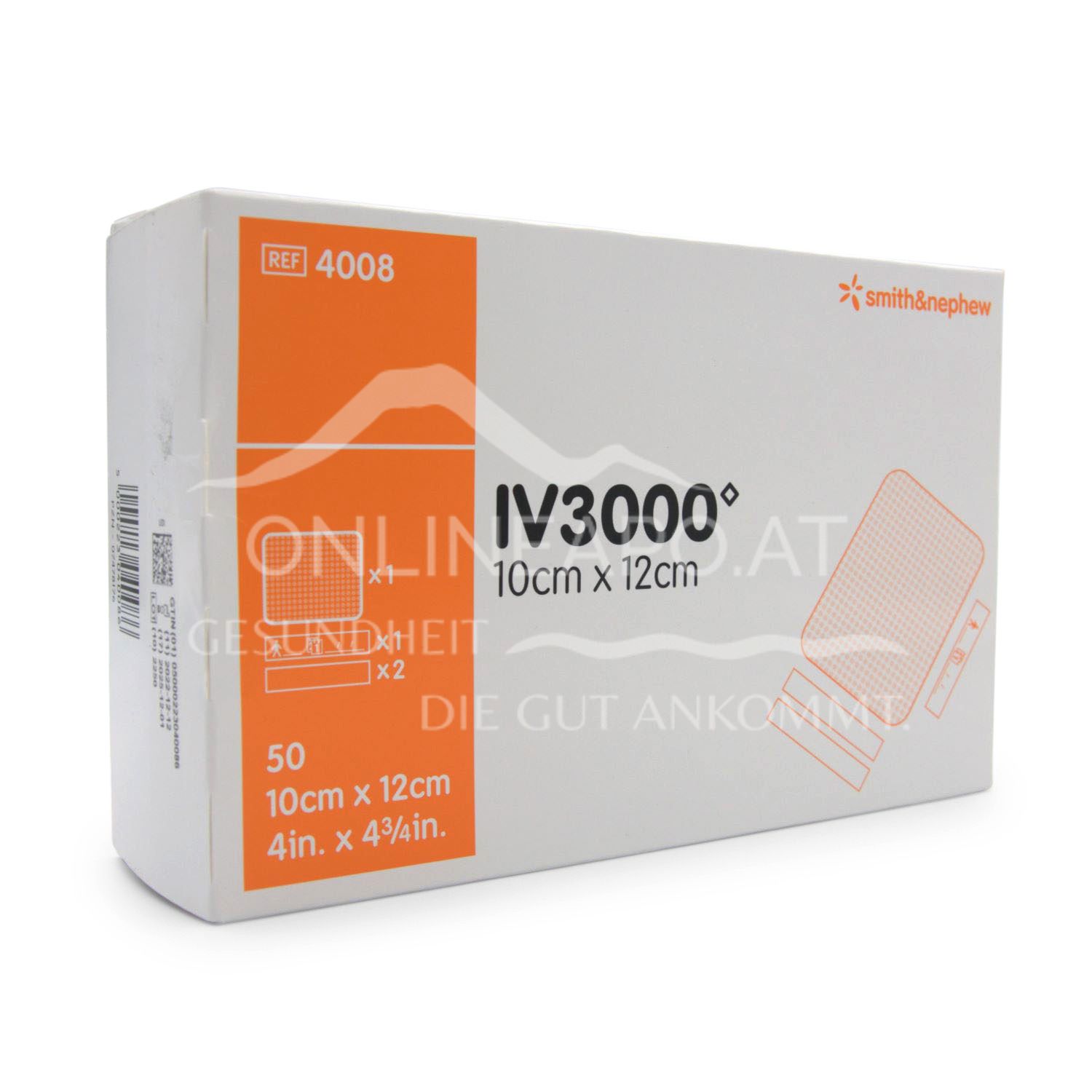
The Smith & Nephew IV3000™ fixation bandage offers high water vapour permeability thanks to the special REACTIC™ film. This keeps the skin dry and ensures secure fixation of catheters.
€267.39
(May vary by country)
Ready to ship in 1-3 working days ⁴
The Smith & Nephew IV3000™ fixation bandage offers high water vapour permeability thanks to the special REACTIC™ film. This keeps the skin dry and ensures secure fixation of catheters.
Water vapour permeable dressings for the fixation of intravenous catheters*
Provides a high Moisture Vapour Transmission Rate (MVTR), helping to prevent bacterial contamination that can be associated with moisture build-up around intravenous (IV) catheter puncture sites.1-3 Easy and painless for the patient to remove, with a transparent film for continuous monitoring of the IV site.4-6
Protection against risk of infection
Moisture creates an ideal environment for bacterial growth with the potential for serious infection by microorganisms.7 IV3000 dressings help to minimise moisture build-up. This is important for strategies to prevent Catheter-Related Bloodstream Infection (CRBSI).8,9
Product properties
- Minimises moisture accumulation: The REACTIC◊ film changes and becomes more permeable if moisture is present, allowing it to evaporate from underneath the dressing.1,2,10,11
- Long shelf life: Can be used for up to 7 days, reducing unplanned dressing changes.**1,12,13
- Reduces the risk of infection: By preventing the accumulation of moisture.1-3
- Mouldable: Fixation strips contribute to better conformability around the dressing site.6,14
Moisture-active, transparent polyurethane film for cannula and catheter fixation - sterile.
- MVTR up to 14,000 g/m²/24 h at 37°C
- With two extra strips for secure fixation of the cannulae and a documentation label
- Impermeable to bacteria and water
- Inspection of the puncture site possible through transparent film
- Can be worn for up to 7 days
- Highly breathable film reduces the accumulation of moisture
1 Keenlyside D. Professional nurse (London, England). 1993;8(5):288-291. 2 Richardson MC. Royal Society of Medicine Services International Congress and Symposium, Series No. 179, Harlow, Essex, UK: Royal Society of Medicine Services Limited; 1991:29-33. 3 Arrowsmith H. British Journal of Nursing. 1999;8(18):1231-1238. 4 Wille JC, et al. J Hosp Infect. 1993;23(2):113 - 121. 5 Mcie S, et al. Am J Crit Care. 2009;18(1):14 - 20. 6 Smith+Nephew 2019. internal report. U/051/R1. 7 Zhang L, et al. Journal of Infection Prevention, 2016; Vol. 17(5) 207-213. 8 Loveday H, et al. Journal of Hospital Infection, pp. S1-S70, 2014 9 Harrold K, et al. Br J Nurs 25(16 Suppl. 1): S1-24. 10 Treston-Aurand J, et al. J Intraven Nurs. 1997;20(4):201 - 206. 11 NHS Clinical Evaluation Team 2018. clinical review: Intravenous Vapour Permeable Film Dressings (IV Films) - Part One Securing Peripheral Cannulae in Adults (PVAD). UK. 12 Neufeld M. McMaster University: School of Graduate Studies, McMaster University; 1991. 13 Besley M. New York: Royal Society of Medical Services Limited, London; 1991:57-59. 14 Oliver, et al. British Journal of Nursing 2015; 24(14).
Dosage form
Transparent cannula fixation dressing sterile
Application
Use only on clean and dry skin. To remove, carefully stretch the film parallel to the skin.
| Piece: | 50 |
|---|