
Mepilex® Transfer foam dressing sterile, 15 x 20 cm, 5 ST

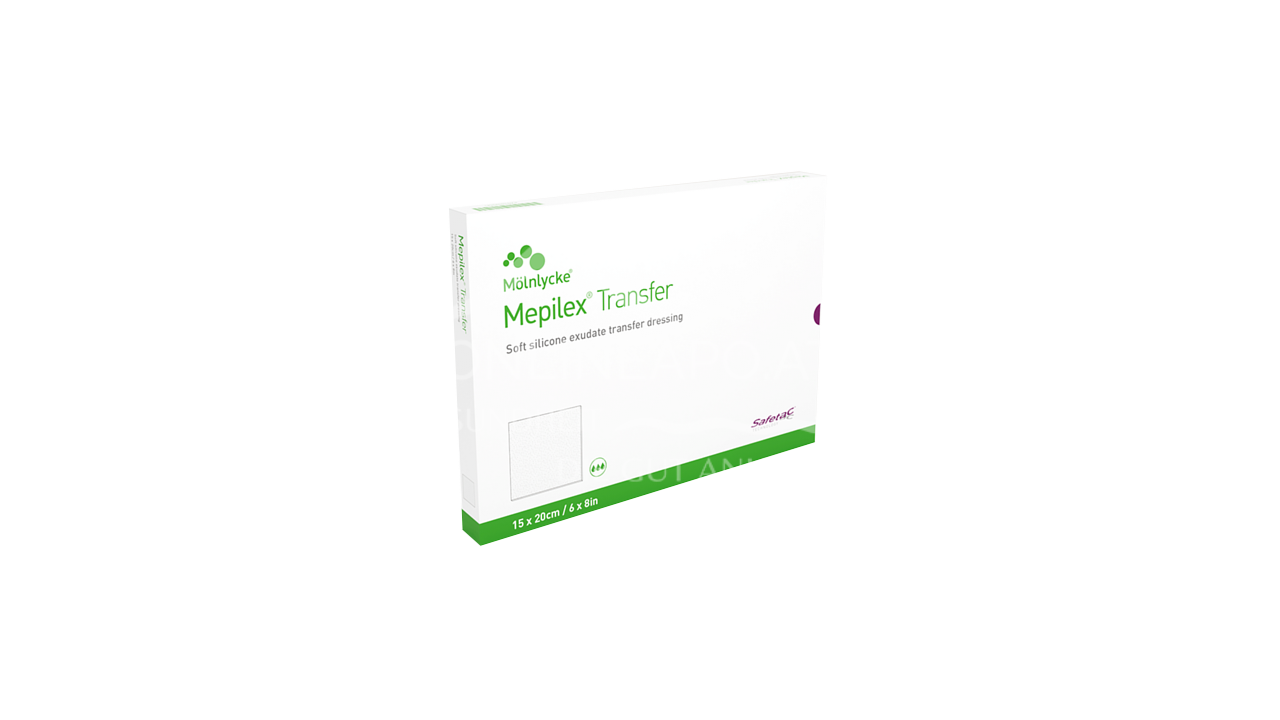
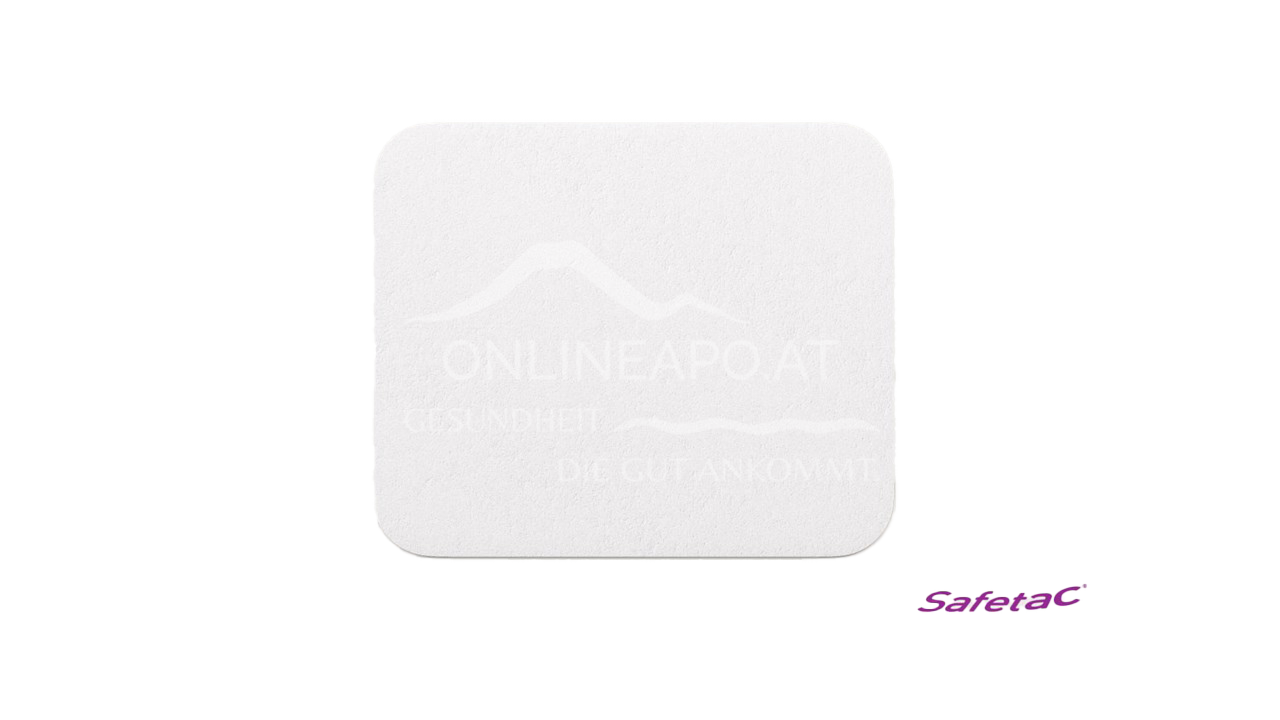
Mepilex® Transfer is a sterile, soft, drainable exudate foam dressing made of silicone for the treatment of slightly to heavily exuding wounds. It effectively drains fluid and protects the skin.
€179.34
(May vary by country)
1-2 weeks ³
No parcel tax applies to your order from Onlineapo.at.
Mepilex® Transfer is a sterile, soft, drainage-capable silicone exudate foam dressing for the management of wounds with low to high levels of exudate. It effectively drains fluid and protects the skin.
Mepilex® Transfer is a soft, drainage-capable silicone exudate foam dressing for a wide range of exuding wounds. It can also be used to protect damaged and/or fragile skin. Mepilex Transfer efficiently drains exudate away from the wound, thereby minimising the risk of maceration 1–3. It maintains a moist wound environment when used in combination with a suitable secondary dressing 2,4,5.
Our Mepilex Transfer dressing is soft, thin and highly conformable, making it suitable even for difficult or hard-to-dress wounds and areas 1,2,3,6. It therefore lies gently against the skin without sticking to the moist wound¹⁻³– thanks to Safetac®.
Numerous randomised studies have shown that dressings with Safetac® are proven to cause less damage to the wound and skin during dressing changes 7–14. By sealing the wound edges, maceration is prevented 7,12. Less damage to the wound and skin means less pain during dressing changes 7–12, 14. Consequently, several randomised studies have linked dressings with Safetac® to faster healing 8–10,14and lower overall treatment costs 8,12,14.
Benefits of Mepilex® Transfer
- Dressings with Safetac minimise pain and trauma during dressing changes 1–4
- Comfortable and adaptable, even for difficult or hard-to-dress wounds and areas 1,2,3,6
- Can be cut to fit various wound shapes and hard-to-dress areas 3
- Efficiently wicks exudate away from the wound, thereby minimising the risk of maceration 1–3
- Promotes patient comfort – thin and comfortable to wear 1,2,15
- Well suited for use under compression dressings 2,3
- Low risk of skin irritation and allergies 3
- Can remain on the skin during radiotherapy using standard energy ranges and absorbed skin doses 16
- Can be used during conventional X-ray examinations, computed tomography (CT) and magnetic resonance imaging (MRI) 3
Indications for Mepilex Transfer
- Mepilex Transfer is intended for a wide range of exuding wounds. Mepilex Transfer can also be used to protect damaged and/or fragile skin.
- The dressing allows exudate to drain vertically into an absorbent secondary dressing, thereby maintaining a moist wound environment 1–5.
1 Mölnlycke Health Care. Data on file. 2 2000
Mölnlycke Health Care. Data on file. 2019. 3 Mölnlycke Health Care. Data on file. 2020. 4 Kaartinen IS, Kuokkanen HO. Suprathel® causes less bleeding and scarring than Mepilex® Transfer in the treatment of donor sites for split-thickness skin grafts. Journal of Plastic Surgery and Hand Surgery. 2011;45(4–5):200–3 5 Yuen W, Huizinga J, Jonkman M. Punch grafting of chronic ulcers in patients with laminin 332 deficiency (nhJEB). J Am Acad Dermatol. 2013(68):93–7 6 Mölnlycke Health Care. Data on File. 2018. 7 Van Overschelde P, et al. A randomised controlled trial comparing two wound dressings used after elective hip and knee arthroplasty. Poster presentation at the 5th Congress of WUWHS, Florence, Italy, 25–29 September 2016. 8 Silverstein P, et al. An open, parallel, randomised, comparative, multicentre study to evaluate the cost-effectiveness, performance, tolerance and safety of a silver-containing soft silicone foam dressing (intervention) versus silver sulfadiazine cream. J Burn Care Res. 2011;32(6):617–626. 9 Gee Kee EL, et al. Randomised controlled trial of three burn dressings for partial-thickness burns in children. Burns. 2015;41(5):946–955. 10 David F. et al. A randomised, controlled, non-inferiority trial comparing the performance of a soft silicone-coated wound contact layer (Mepitel One) with a lipidocolloid wound contact layer (UrgoTul) in the treatment of acute wounds. International Wound Journal, 2018. 11 Patton ML, et al. An open, prospective, randomised pilot study evaluating pain associated with the use of a soft silicone wound contact layer versus bridal veil and staples on split-thickness skin grafts as a primary dressing. J Burn Care Res. 2013;34(6):674–681. 12 Bredow J. et al. Evaluation of absorbent versus conventional wound dressings. A randomised controlled trial in orthopaedic surgery. Deutsche Ärzteblatt International, 2018. 13 Meaume S, et al. A study to compare a new self-adherent soft silicone dressing with a self-adherent polymer dressing in stage II pressure ulcers. Ostomy Wound Manage. 2003;49(9):44–51. 14 Gotschall CS, et al. Prospective, randomised study of the efficacy of Mepitel in children with partial-thickness scalds. J Burn Care and Rehabil. 1998;19(4):279–283. 15 Schwieger-Briel A, Kiritsi D, Schempp C, Has C, Schumann H. Betulin-based oleogel to improve wound healing in dystrophic epidermolysis bullosa: A prospective controlled proof-of-concept study. Dermatology Research and Practice. 2017;2017 16 Mölnlycke Health Care. Data on file. 2006
Dosage form
Sterile silicone-coated foam dressing
Directions for use
- Clean the wound and dry the surrounding skin. Remove the protective film from the open side.
- Mepilex Transfer should be applied to at least 5 cm of healthy skin surrounding the wound.
- Apply a suitable absorbent secondary dressing, e.g. Mextra Superabsorbent, and secure it in place.
| Piece: | 5 |
|---|