
Dr Kottas’ Dandelion and Pansy Herbal Tea, 20 ST

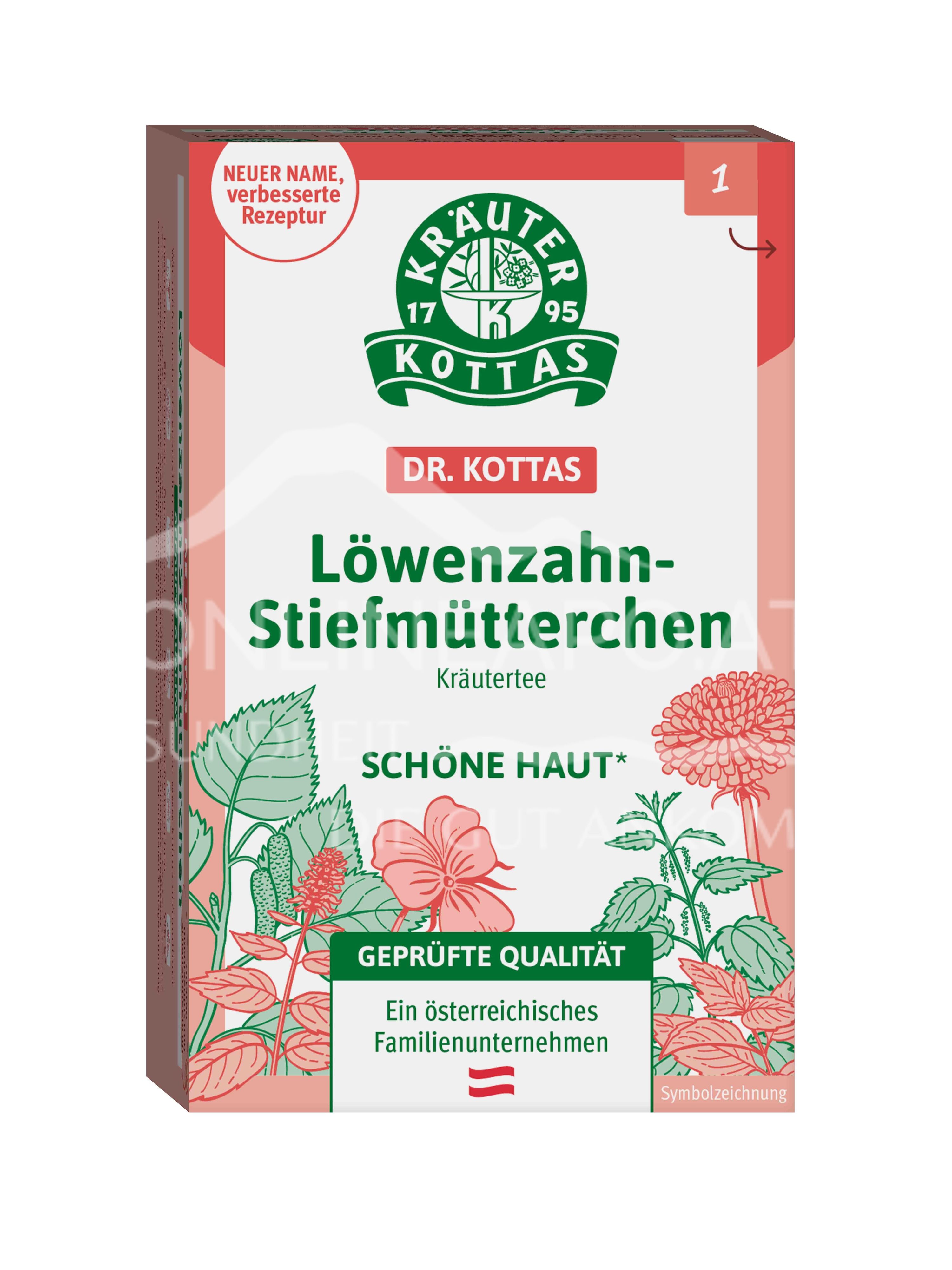
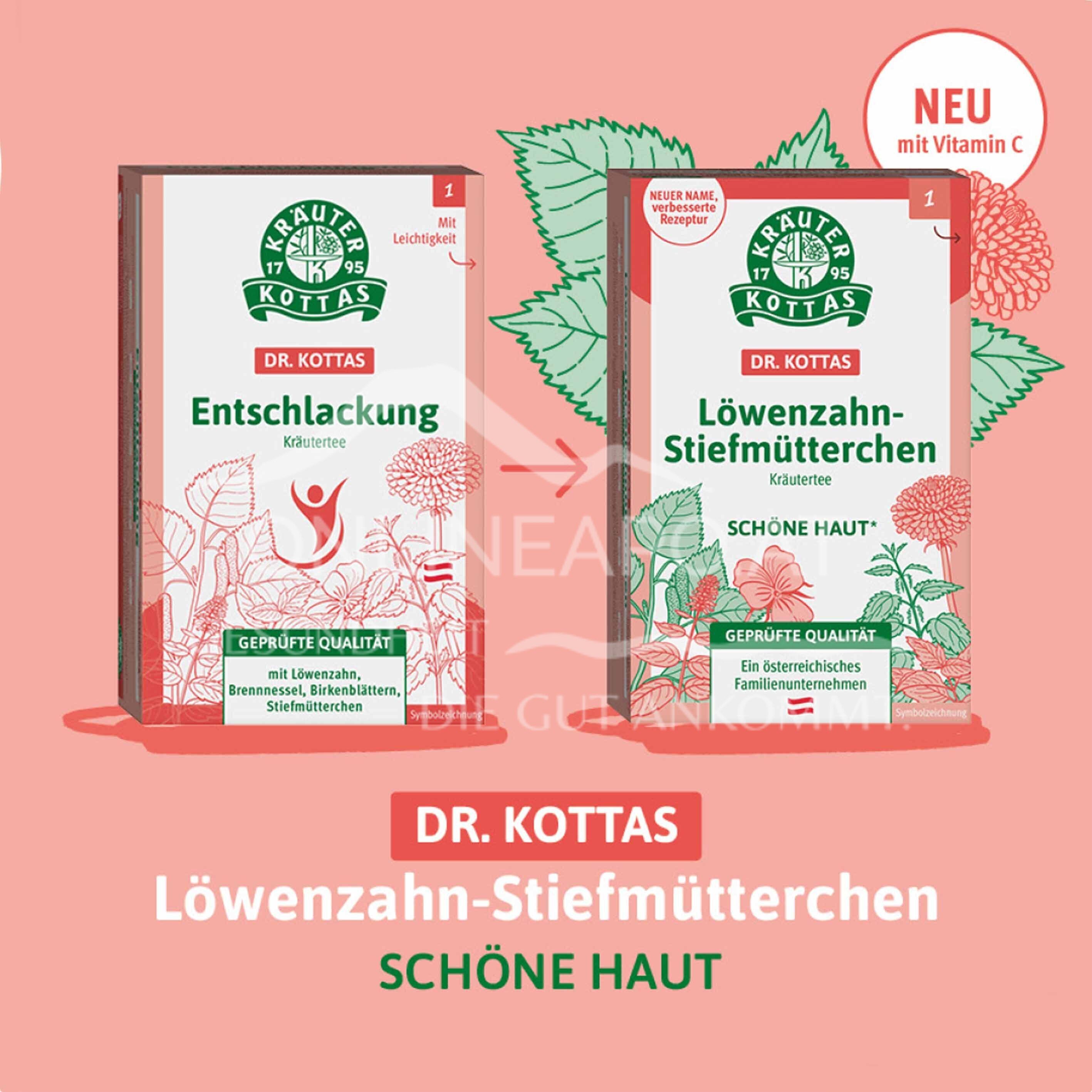
Dr Kottas’ Dandelion and Pansy Herbal Tea, in its tried-and-tested pharmacy-grade quality, combines carefully selected herbs. According to herbal medicine, this herbal blend traditionally supports digestion and metabolic processes.
€6.31
(May vary by country)
Ready to ship in 1-3 working days ⁴
Dr Kottas’ Dandelion and Pansy Herbal Tea, in tried-and-tested pharmacy quality, combines carefully selected herbs. According to herbal medicine, this herbal blend traditionally supports digestion and metabolic processes.
The herbs in this formula have a cleansing effect on the body. Nettles and birch leaves stimulate kidney function and increase urine output. Thanks to its bitter compounds, dandelion root stimulates bile flow and thus aids the digestion of fats. Peppermint leaves have a refreshing and harmonising effect on digestion. Pansy herb is traditionally found in many old herbal tea recipes for fasting and is highly valued for its reputed ‘blood-purifying’ effect.
Dandelion (Folium Taraxaci, Radix Taraxaci, Flos Taraxaci and Herba Taraxaci cum radice)
- The dandelion is an extremely adaptable plant; it grows in many types of soil. From March to April, its bright yellow flower heads can be seen in meadows and fields. The young, fresh leaves can also be used in salads or soups.
- Effect: Dandelion stimulates the kidneys and gallbladder to increase their activity. It is therefore used for disorders of bile flow and dyspeptic complaints as a naturally mild choleretic, diuretic and adjuvant for digestive disorders, particularly in cases of poor fat digestion.
Birch ( Folium Betulae)
- Birch trees can grow up to 30 metres tall and are characterised by their white-patterned bark. The leaves used medicinally are harvested in May and June and dried. They contain flavonoids, which are complemented by numerous other constituents (essential oil, bitter principles, tannins, vitamin C, saponins, etc.).
- Effect: To promote urine production and to treat conditions where increased urine production is desirable (urinary gravel, for the prevention of urinary stones). As a flushing therapy for the urinary tract in cases of bacterial or inflammatory conditions, accompanied by spasmodic symptoms.
Peppermint ( Folium Menthae piperita)
- Peppermint is a naturally occurring hybrid of two mint species (M. spicata and M. aquatica). It is sterile, i.e. it cannot reproduce naturally. It was first discovered in England in 1696 in a field of spearmint and has been cultivated from seedlings ever since. It grows up to 90 cm tall and contains essential oil. The leaves give off a characteristic scent when crushed.
- Effects: The main active ingredient in peppermint is essential oil, particularly menthol.Peppermint leaves are used to treat colds and headaches; they also relieve cramp-like symptoms in the gallbladder area and the gastrointestinal tract.
Stinging nettle ( Folium Urticae, Herba Urticae)
- The stinging nettle grows to a height of 60 cm to 150 cm and is dioecious, i.e. each plant bears either male or female flowers. In the case of the small stinging nettle, which grows to a height of only 15 cm to 45 cm, each plant has both female and male flowers.
- Effect: Stimulates the body’s overall metabolism and increases urine output. To support the treatment of urinary complaints.
Dosage form
Tea bags
Directions for use
- For each cup (125 ml), pour boiling water over 1 tea bag, cover and leave to infuse for 10 minutes. Then squeeze the tea bag well and drink the tea lukewarm, in small sips.
- Tip: When fasting, ensure you drink plenty of fluids, avoid stress and allow your body plenty of rest! You might also like to try Dr Kotta’s Alkaline Tea to help maintain a balanced acid-alkaline balance.
Ingredients
Ingredients: 30% dandelion root (Taraxaci radix),
26% heartsease (Violae tricoloris herba),
20% nettle leaves (Urticae folium), 13% peppermint leaves
(Menthae piperitae folium), 10% birch leaves (Betulae folium),
vitamin C.
| Piece: | 20 |
|---|