
Doppelherz system OMEGA-3 VEGAN LIQUID 2000 algae oil, linseed oil drops, 100 ml

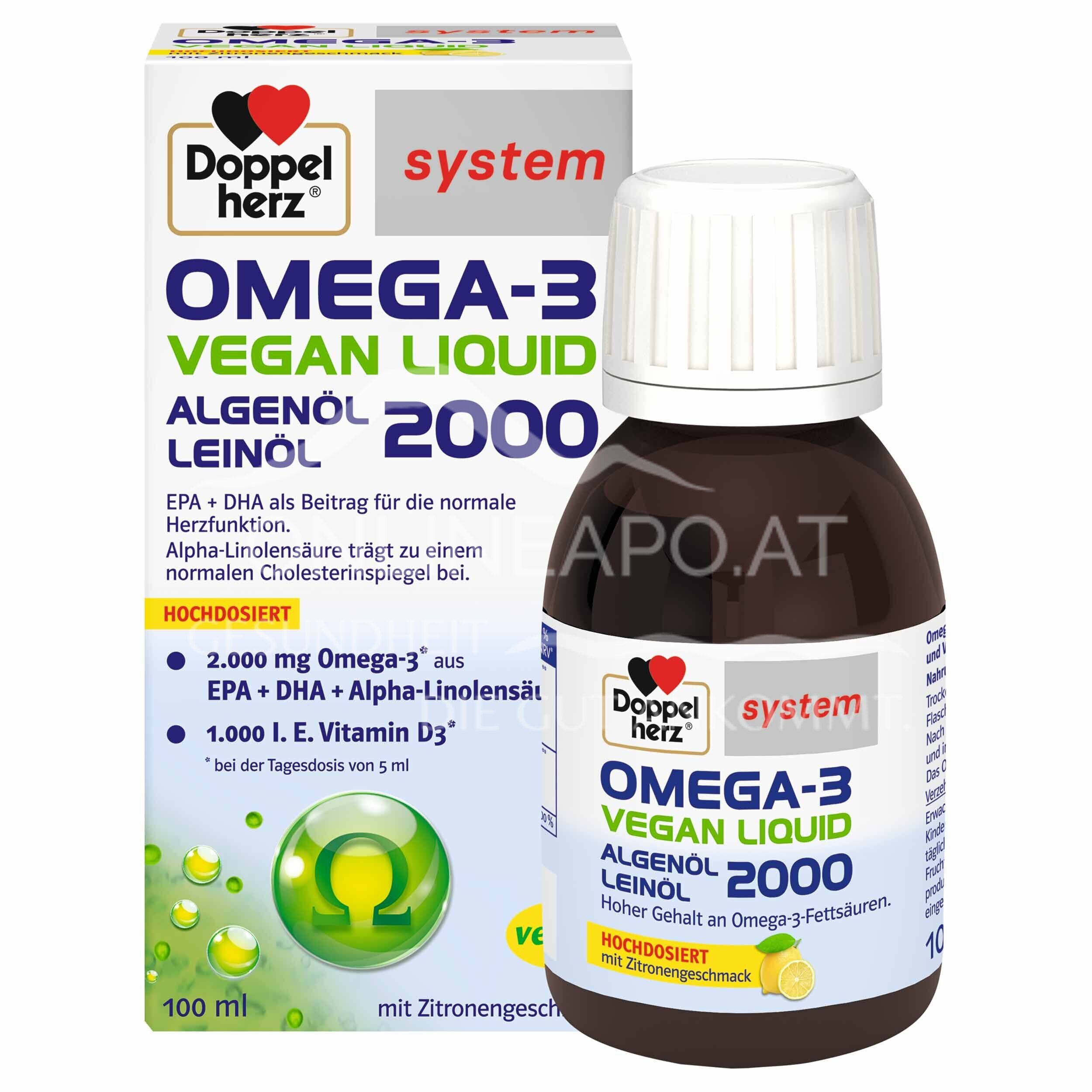
Support your heart and brain with Doppelherz system OMEGA-3 VEGAN LIQUID 2000, a combination of algae and linseed oil that provides essential fatty acids for the maintenance of normal vision and heart function.
€24.95
(May vary by country)
Ready to ship in 1-3 working days ⁴
No parcel tax applies to your order from Onlineapo.at.
Support your heart and brain with Doppelherz system OMEGA-3 VEGAN LIQUID 2000. The combination of algae and linseed oil provides essential fatty acids for the maintenance of normal vision and heart function.
Algae oil with omega-3 for heart function + D3 for the immune system
- Liquid omega-3 fatty acids from high-quality algae oil and linseed oil
- Highly dosed: 2000 mg omega-3¹ from EPA + DHA + alpha-linolenic acid
- EPA and DHA as a contribution to normal heart function²
- DHA forbrainfunction³
- 1000 I.U. vitamin D¹ from plant origin
Algae oil: the plant-based omega-3 hero
If you don't regularly eat oily sea fish, you have to get your omega-3 supply from other sources. The effective plant-based alternative is the oil from certain microalgae, which is particularly easy to take in liquid form as Doppelherz system OMEGA-3 VEGAN LIQUID. Combined with high-quality linseed oil and vitamin D, it makes a valuable contribution to daily nutrient intake
What makes algae oil so healthy?
The human organism depends on a regular supply of valuable omega-3 fatty acids. This is because they cannot be produced by the body itself (unless the corresponding precursors are present), but fulfil various important functions. The long-chain omega-3 fats DHA (docosahexaenoic acid) and EPA (eicosapentaenoic acid) in particular are a real boon to our health when consumed in sufficient quantities:
- Brain: The highest levels of DHA are found in areas of the brain such as the cerebral cortex, mitochondria and synapses. 25 % of the fat in the brain consists of DHA! DHA is involved in the formation of connections and the transmission of signals in the brain. 250 mg of the omega-3 fatty acid DHA per day contributes to the maintenance of normal brain function.
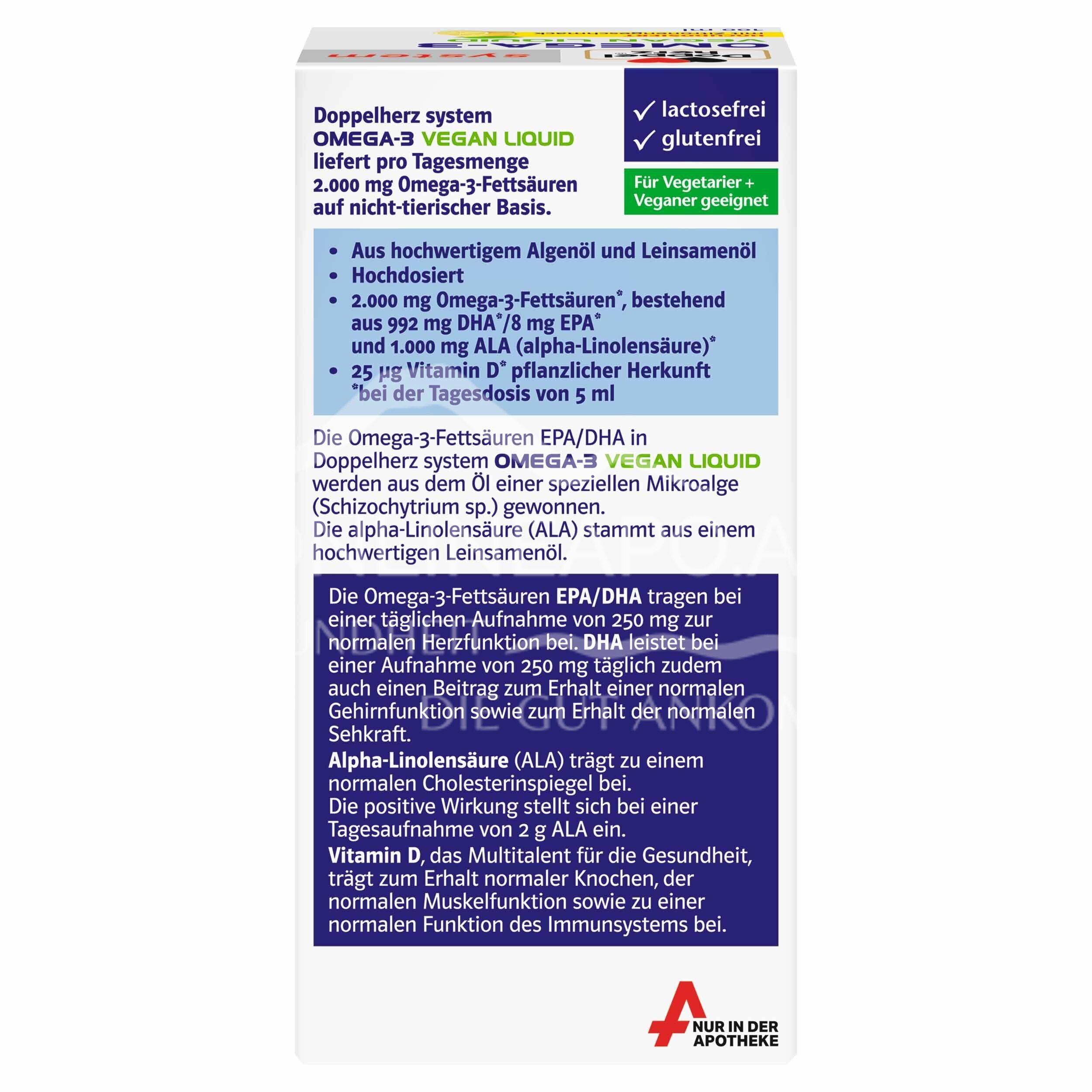
- Heart: DHA (docosahexaenoic acid) and EPA (eicosapentaenoic acid) can make an important contribution to heart health and normal heart function. ²The omega-3 fatty acids EPA and DHA contribute to the maintenance of normal heart function with a daily intake of 250 mg.
- Eyes: Polyunsaturated fatty acids are important components of photoreceptors and the retina. Docosahexaenoic acid DHA is the most abundant fatty acid in photoreceptors, accounting for 60%. It also plays a role in the structure of the retina. 250 mg of the omega-3 fatty acid DHA per day helps to maintain normal vision.
In addition to oily sea fish and fish oil obtained from it, algae oil from the microalgae Schizochytrium sp. also provides DHA and EPA. The oil can therefore be used as a plant-based alternative for the daily dose of omega-3.
Algae oil, linseed oil, fish oil: the differences
Many oils provide omega-3 fatty acids. To cover the daily requirement of DHA and EPA, products obtained from fatty fish are suitable. The vegan alternative is microalgae oil from the algae Schizochytrium sp., which has a high quantity and bioavailability of DHA and EPA. The effect of algae oil is therefore comparable to that of fish oil, but always depends on the quality and dosage of the individual product.
There are also vegetable oils that have a very high proportion of omega-3 fatty acids but provide neither EPA nor DHA. This applies to linseed oil, for example: it is rich in the omega-3 fatty acid alpha-linolenic acid (ALA)
It is the precursor for docosahexaenoic acid (DHA) and eicosapentaenoic acid (EPA) and must therefore first be converted into these biologically active fatty acid forms in the body. However, the conversion rate is actually a maximum of five per cent.
Conventional vegetable oils are therefore practically unable to adequately cover the daily requirement when consumed in the usual quantities. Nevertheless, they are an extremely valuable and healthy addition to the daily diet:
Alpha-linolenic acid contributes to the maintenance of normal blood cholesterol levels. The positive effect is achieved with a daily intake of 2 g ALA.
When does it make sense to take algae oil?
The easiest and most natural way to provide the body with sufficient omega-3 (DHA/EPA) is to eat a balanced diet that includes regular fish consumption. Experts recommend two fish meals a week, with at least 70 g of oily sea fish.
Food supplements with algae oil are a plant-based alternative that allow all people who follow a vegan or vegetarian diet or who reject fish for taste or health reasons to easily meet their omega-3 fatty acid requirements. People who do not like swallowing capsules can buy liquid algae oil.
The Doppelherz system OMEGA-3 VEGAN LIQUID 2000 with fresh lemon flavour provides algae oil without side effects such as unpleasant burping. It is easy to dose, tastes good on its own, in yoghurt or smoothies - and even provides another extremely valuable nutrient: Vitamin D.
Vitamin D: the all-rounder for good health
Vitamin D contributes to the maintenance of normal bones, normal muscle function and the normal functioning of the immune system. Nevertheless, many people do not get enough of it from their diet. 5 ml of Doppelherz system OMEGA-3 VEGAN LIQUID 2000 provides you with 25 μg (= 1000 I.U.) of vitamin D from plant sources.
Doppelherz system OMEGA-3 VEGAN LIQUID 2000 - The advantages at a glance
- Omega-3 fatty acids from high-quality algae oil with good bioavailability
- Combination of DHA, EPA to support normal heart function²
- Usefully combined with alpha-linolenic acid (ALA) from linseed oil to support normal cholesterol levels⁴
- 25 μg vitamin D¹ of plant origin
- Suitable for vegetarians + vegans
- Liquid and delicious: with a fresh lemon flavour
- Tastes great in yoghurt, smoothies or on its own!
- Just 1 teaspoon daily
¹ With a daily dose of 5 ml ² With a daily intake of 250 mg ⁴ The positive effect is achieved with a daily intake of 2 g ALA
Using algae oil correctly
Algae oil is used as a dietary supplement and is suitable for daily consumption. It can be consumed pure, but can also be stirred into food. It is important that it is only used in cold dishes, as the valuable omega-3 fats are very sensitive to heat. Algae oil should not be used for cooking or baking.
How much algae oil a day is good for you?
The dosage of algae oil depends on the product. For Doppelherz system OMEGA-3 VEGAN LIQUID we recommend a daily intake of 5 ml. Further information and exact consumption recommendations can be found on the packaging and package leaflet.
Dosage form
Liquid
Directions for use
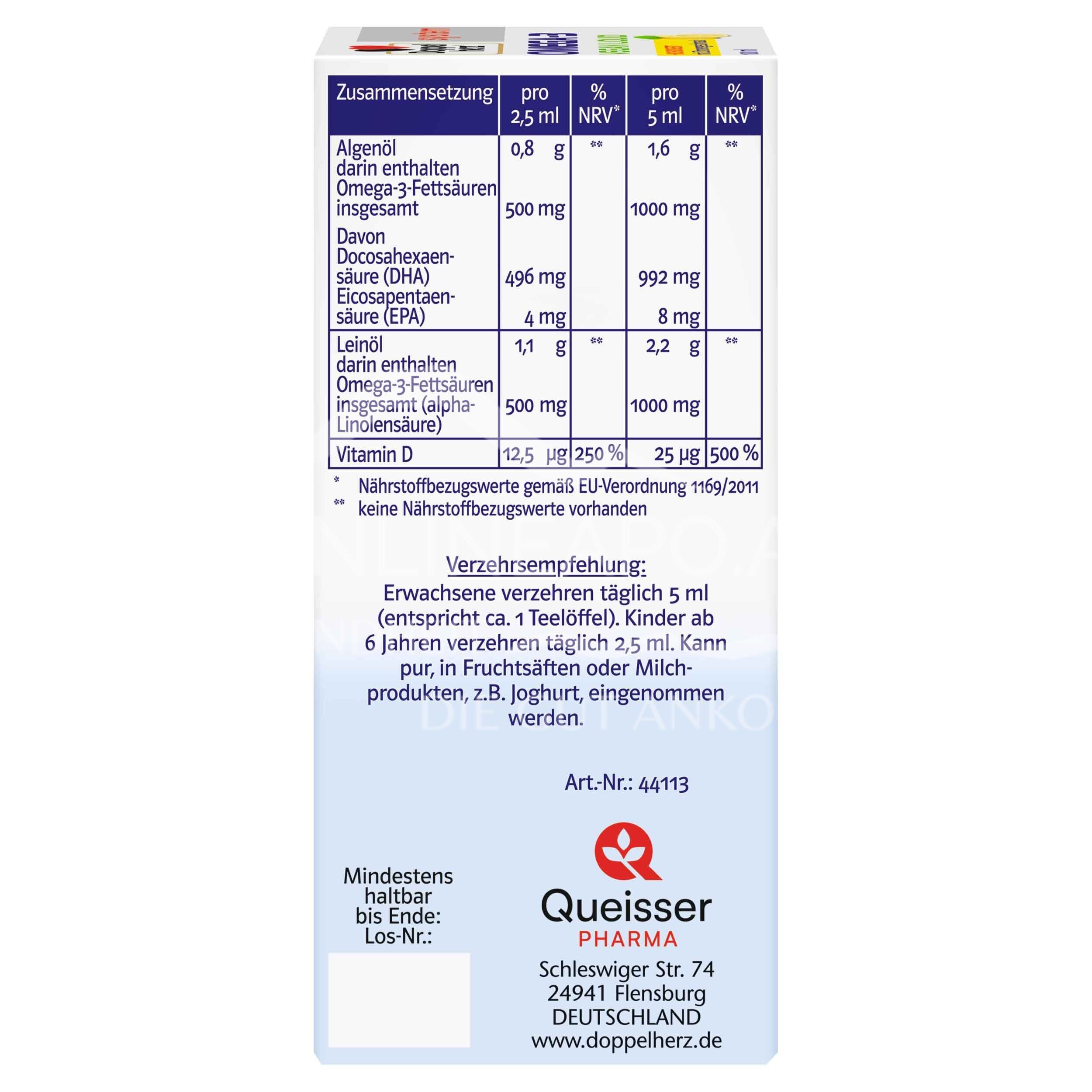
- Adults consume 5 ml daily (corresponds to approx. 1 teaspoon).
- Children from 6 years consume 2.5 ml daily.
- Can be taken pure, in fruit juices or dairy products, e.g. yoghurt
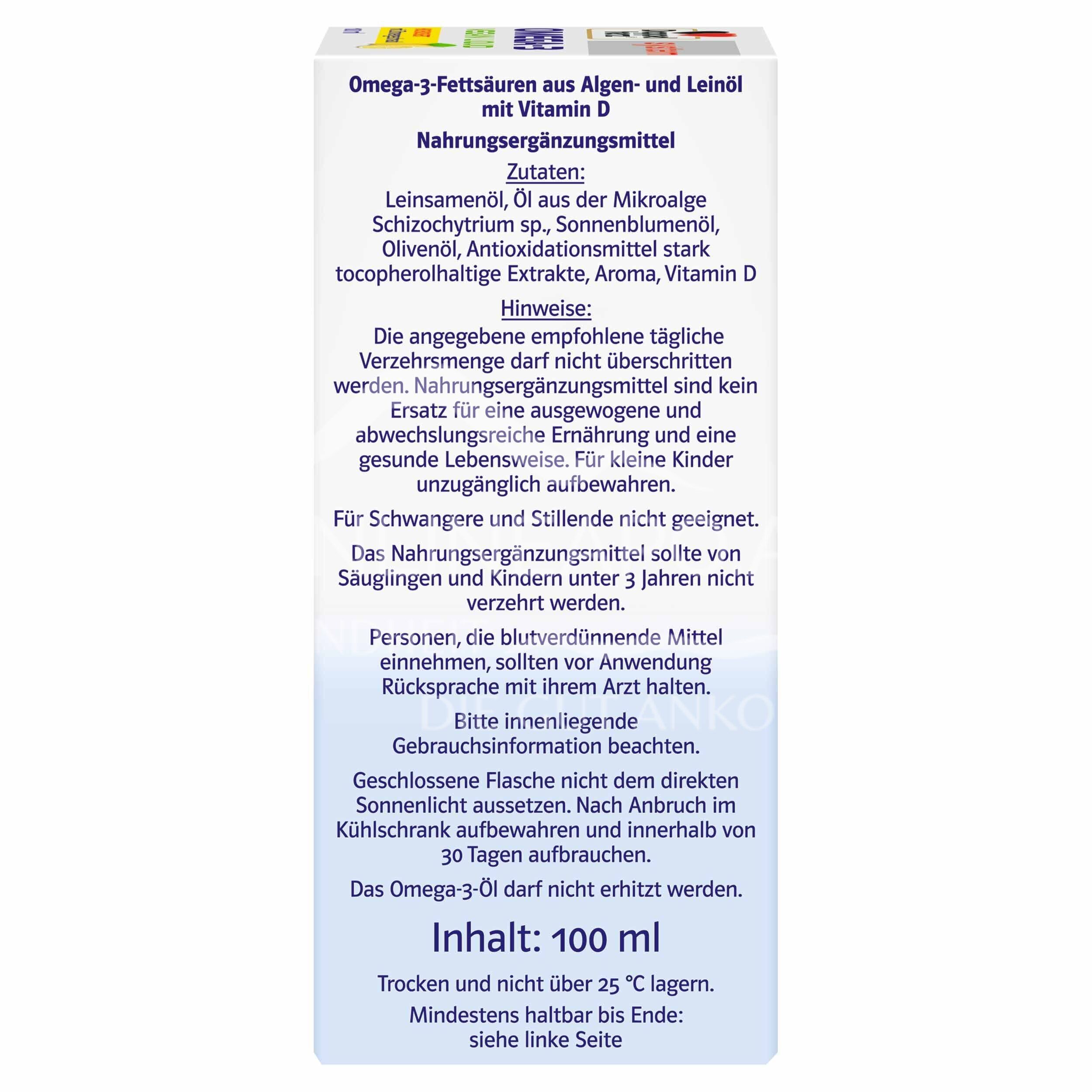
- Advice: Not suitable for pregnant and breastfeeding women. The food supplement should not be consumed by infants and children under 3 years of age. People taking blood-thinning medication should consult their doctor before use.
Ingredients
- Ingredients: Linseed oil, oil from the microalgae Schizochytrium sp., sunflower oil, olive oil, antioxidant extracts containing strong tocopherols, flavouring, vitamin D.
- Composition per daily dose (2.5ml) %NRV*: Algae oil 0.8 g ** containing omega-3 fatty acids total 500 mg of which docosahexaenoic acid (DHA) 496 mg eicosapentaenoic acid (EPA) 4 mg, linseed oil 1.1 g ** containing omega-3 fatty acids total (alpha-linolenic acid) 500 mg, vitamin D 12.5 µg 250 % * nutrient reference values according to EU Regulation 1169/2011 ** no nutrient reference values available.
| ML: | 100 |
|---|---|
| Flavour: | Lemon |
| Gluten-free: | Yes |
| Lactose-free: | Yes |
| Vegan: | Yes |